At first, you might think someone has made a mistake.
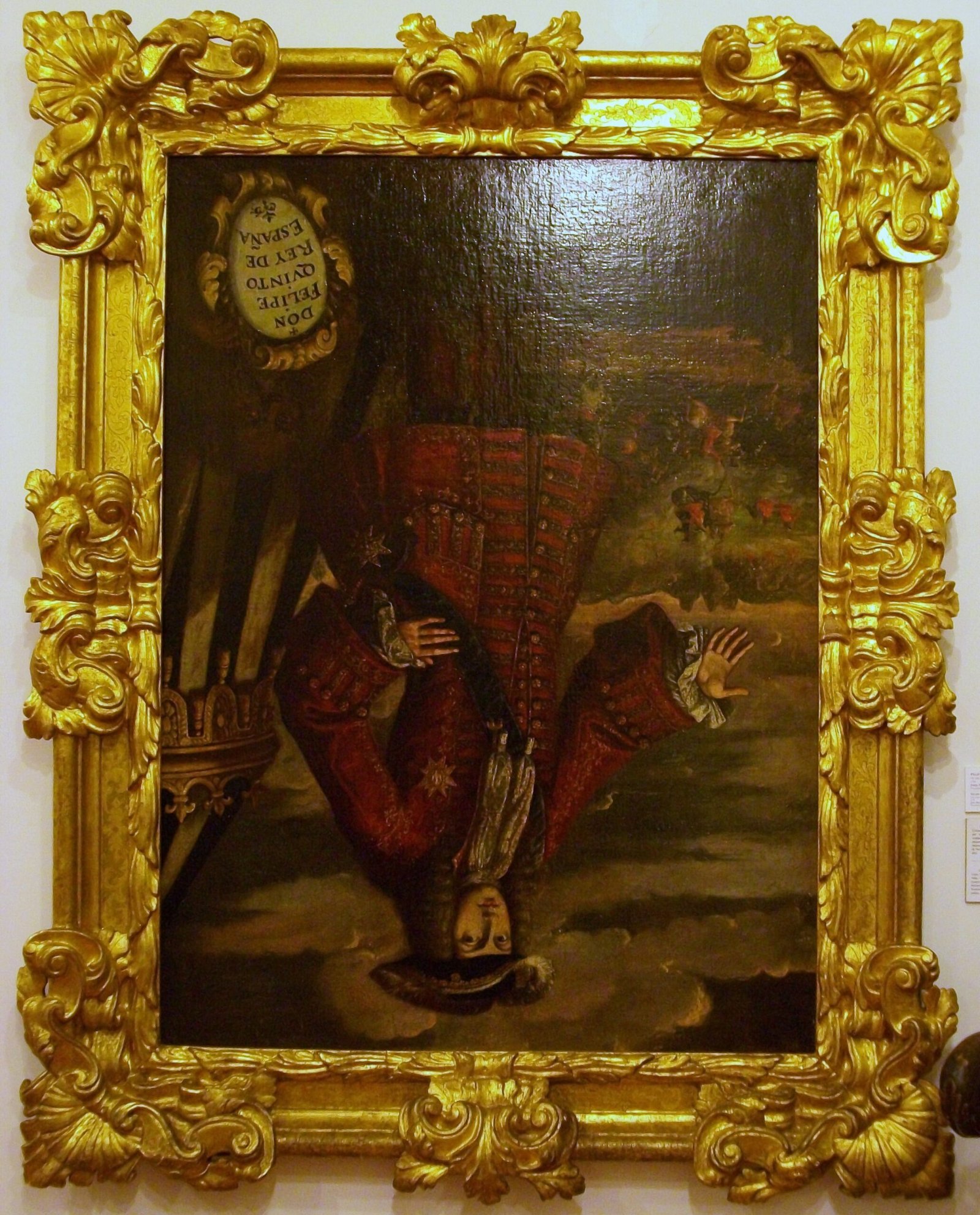
A king hangs upside down. The frame is in place, the painting is carefully displayed, and everything about a museum tells you that this ought to be a room of order. Yet the monarch’s head points towards the floor.
In Xàtiva, the mistake would be to turn him back.
The portrait is of Philip V of Spain, and its unusual position is a deliberate act of remembrance. To understand it, you have to leave the quiet of the gallery in your imagination and return to a city punished by fire.
The city that a king wanted to punish
During the War of the Spanish Succession, Xàtiva supported Archduke Charles of Austria against Philip V. In June 1707, the city suffered a devastating fire ordered as punishment for its resistance to the Bourbon forces. Its inhabitants were expelled, and even its name was changed to Ciudad de San Felipe.
A changed name can look like a small detail in a history book. Try imagining it applied to the place where you grew up. The streets might still be familiar, but the name on an official document now honours the ruler responsible for their destruction.
The injury reaches beyond walls. A city is also the name people use when they tell someone where they belong.
There is no need to invent the words of a witness or describe flames we have never seen. The documented punishment is disturbing enough. What makes Xàtiva’s story unusual is the answer that later generations chose to give it.
A portrait becomes a reply
The portrait was painted in 1719 by Josep Amorós. Its inverted display came later, as a symbolic punishment of the monarch.
A royal portrait usually asks for a particular kind of attention. The ruler is presented to be recognised, respected and remembered on his own terms. Here, the city changes the terms.
The painting survives. The king remains visible. But the wall refuses to grant him the dignity he expected.
That is what makes the gesture so memorable. Nothing needs to be written across the canvas for the viewer to sense that something is wrong. You ask a question, and the city gets to tell its story.
Different accounts give conflicting dates for when the portrait was first inverted. We will not turn an uncertain detail into a neat anniversary. The meaning of the display is clear; the precise beginning of the custom deserves more care.
The painting had secrets of its own
The canvas returned from a major restoration in 2025. Conservators identified hidden painted details and overlapping inscriptions, including a reference to Fernando of Bourbon beneath the visible royal identification.
These were physical discoveries made during examination of the artwork. They give the story a second layer: a picture used to express public memory had itself been altered over time.
Stand in front of an old painting and you usually see a single surface. Conservation reminds us that the surface can be a final sentence written over earlier drafts. What has been covered may still be there.
There is also a striking irony in the care given to this portrait. Xàtiva preserves an image associated with a painful past so that its protest can remain visible. Looking after the object does not require forgiving its subject.
The name that still carries the fire
Xàtiva’s tourism office links the nickname socarrats — roughly, ‘the scorched ones’ — with the memory of the burning.
A nickname can carry a history more easily than a date. People may forget the sequence of a war and still remember what a community calls itself.
Read the word beside the upside-down portrait and the two seem to belong to the same conversation. One is spoken; the other is seen. Both keep an old wound from becoming an anonymous paragraph.
Above it all, a castle on the ridge
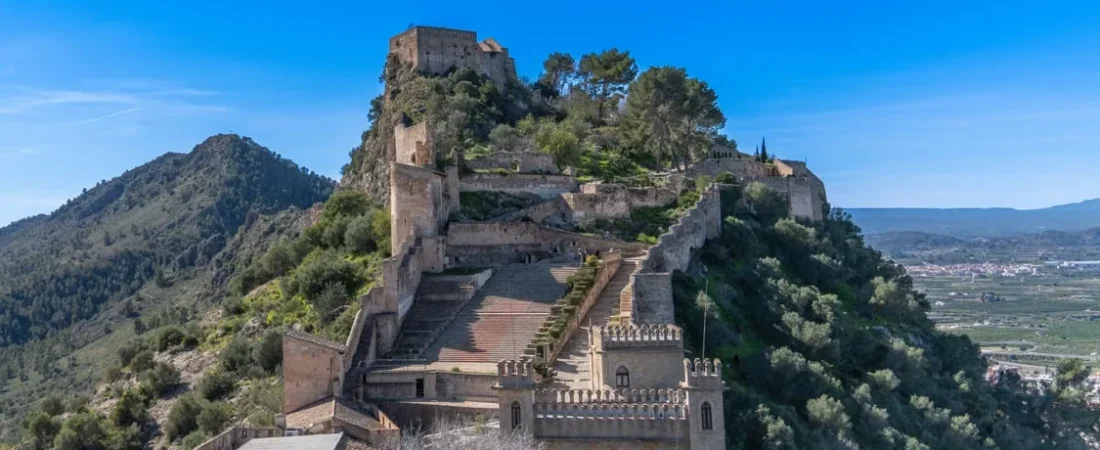
The castle is often what brings visitors to Xàtiva first. Its two principal sections, Castell Menor and Castell Major, stretch along the high ground above the city.
Give yourself time for both scales of the visit. From the castle, the city becomes a landscape. In the museum, a single object brings you back to a human act of remembrance.
Our suggestion is to resist making the day only about the panorama. Walk through the old town as well. Find somewhere to pause. The story of a place rarely fits into the view from its highest point.
For other destinations where the past changes how you see the scenery, discover Peñíscola and Papa Luna or Morella and La Balma.
Where to see the upside-down king
Look for the Museu de Belles Arts — Casa de l’Ensenyança, Xàtiva’s Museum of Fine Arts. The city’s current tourism information identifies it as the home of the portrait.
Older photographs and articles often mention the Almodí. That name belongs to the painting’s earlier display history; it should not be your only clue when planning a visit today.
Check the official museum information and museum ticket page for current arrangements. Allow separate time for the castle, and check its opening hours too.
If seeing the portrait is the main reason for your trip, confirm its availability with the museum before travelling. Exhibition and conservation arrangements can change.
From Xàtiva to the monastery of Valldigna
Our Travel to Valencia tour pairs Xàtiva with the Monasterio de Santa Maria de la Valldigna in Simat de la Valldigna.
Discover the other half of this journey in Valldigna Monastery: The Valley That Kept Its Secrets. The monastery offers another chapter in the region’s history. Founded by Jaume II in 1298, it belongs to the Cistercian tradition. The municipality describes a long period of abandonment followed by public acquisition in 1991 and work to recover the complex.
For us, the pairing creates a thoughtful journey through what places keep, lose and recover. In Xàtiva, a portrait preserves an accusation. At Valldigna, the surviving monastery invites you to imagine the community that once gave its spaces a daily purpose.
You can read more regional ideas in our Travel to Valencia day-trip guide.
Sources and images
Historical and conservation details: Generalitat Valenciana’s restoration report. Museum location and historical context: Xàtiva tourism; the socarrats nickname: Monumental Xàtiva. Monastery history: Simat de la Valldigna municipality. Reflective passages are our interpretation.
Castle image from Travel to Valencia’s media library. Archival portrait photograph by Joanbanjo, via Wikimedia Commons, released into the public domain. It shows the painting before the 2025 restoration and is not a photograph of the current installation.

See Xàtiva and Valldigna with us
Join our Xàtiva + Monasterio de Santa Maria de la Valldigna excursion from Valencia. Send us your date, group size and pickup location to check availability and receive the itinerary and price.
The museum visit to see the upside-down portrait of Philip V is included in our Xàtiva + Valldigna tour. Discover the story in the gallery itself, then continue the journey to the monastery.
Some cities put their rulers on pedestals. In Xàtiva, one king still has to face the other way.