Some places are beautiful until you learn their names. Then they become something else.
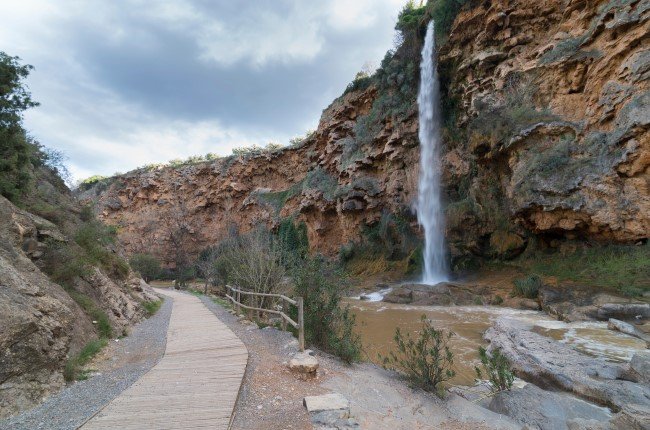
At Salto de la Novia, a white thread of water falls against the rock, and the name follows you down towards the river: the Bride’s Leap. It sounds romantic. Almost like a promise. Yet the story attached to this landscape is about a wedding that never happened.
This is Navajas, in the province of Castellón, beyond Valencia’s familiar city streets. Come for the waterfall, certainly. But leave a little room for the uneasy question its legend carries: why should anyone have to risk everything to prove that they love someone?
The bride, the river and the impossible test
What follows is local folklore, not a documented account of an identified couple. In the version preserved by Navajas tourism, a bride was expected to demonstrate her love before family and friends by jumping across a narrow part of the river. She slipped. Her beloved went after her, and both drowned.
The legend gives the landscape a second voice: on moonlit nights, the lovers’ unfulfilled promises can supposedly be heard, while the waterfall weeps for them. These are the poetic elements of the tale, rather than evidence of a haunting.
It is a short story, but its cruelty lingers. Imagine reaching the edge with the people closest to you watching. The disturbing part is the audience: a private feeling turned into a public test, with the river waiting underneath.
We do not need to invent her name, her dress or her final words. The silence where those details should be makes the story more powerful. You can picture the moment of hesitation without pretending that anyone recorded it.
The detail almost everyone gets wrong
The bride’s leap is across the river — not from the top of the waterfall. Once you know that, the photograph and the story stop competing with each other.
The spectacular cascade is called El Brazal, described by the regional tourism authority as around 60 metres high. Salto de la Novia is the name you will encounter for the surrounding natural setting. The river here is the Palancia.
That small distinction matters. A dramatic photograph can quietly rewrite a legend in our minds. Look at the falling water and it is easy to imagine a leap from above. The local telling places the tragedy much closer to the ground — at a crossing that seemed possible.
Why this legend stays with you
There is no dragon to defeat here. No secret chamber, no treasure beneath the stones. The danger begins with an expectation that nobody in the story appears to question.
Perhaps that is why the tale feels so uncomfortable. It asks something recognisable beneath its old-fashioned setting: how often do people confuse devotion with a willingness to endure a dangerous demand? This is our reading of the story, rather than a claim about its original meaning.
The waterfall offers no answer. It carries on falling. A visitor can arrive knowing nothing, take a lovely photograph and leave happy. Another can hear the legend first and find exactly the same view unexpectedly sorrowful. The landscape has not changed. What we bring to it has.
There is older history beneath the romance
The surrounding rock shelters add a different kind of depth. Navajas tourism describes prehistoric use of these cavities, including a Copper Age burial place and Bronze Age shelters or livestock enclosures.
That is a separate thread from the lovers’ story. Archaeology does not prove the legend; it reminds us that this landscape mattered to people long before today’s visitors arrived with cameras.
It is tempting to turn every hollow in a rock into a secret. Sometimes the more interesting thought is simpler: someone once needed shelter here. Someone chose this place for the dead. The traces of ordinary human needs can be as arresting as any ghost story.
How to enjoy the place without rushing it
Try giving yourself a few minutes before taking the first photograph. Find a safe place on the designated route and listen. Follow the falling water with your eyes, then look away from the obvious centre of the scene. Notice the rock, the vegetation and the space around the river.
For a small travelling ritual, take two photographs: one wide view of the waterfall, and one quiet detail you would otherwise overlook. Later, see which image brings the place back more vividly. The grand view tells you where you were; the small detail may remind you how it felt.
If you are visiting with children, you can leave the tragic ending aside and make the stop about water, sound and observation. There is no need to turn a family outing into a frightening story.
Visiting Salto de la Novia: what to know
The municipal access information describes a walk of roughly 500 metres downhill on a paved road from the access point near Plaza del Matadero to the river area. Remember that the return is uphill. Visitors who need vehicle assistance for reduced mobility should speak to staff at the entrance.
Access controls and an admission charge apply during certain busy periods. Check the official Navajas access information before travelling for current arrangements.
Plan this as a waterfall visit, not a guaranteed swimming stop. The municipality reports dangerous-bathing signage and advises against standing beneath the cascade or approaching slippery areas. Follow local signs and conditions, and keep the legendary river crossing firmly in the story.
Can you combine it with Montanejos?
Yes — our Travel to Valencia day-trip guide pairs Montanejos with Salto de la Novia. They are separate stops, so ask us about the route, availability and arrangements for your date.
There is a pleasing rhythm to a day built around water and landscape, with a story to carry between the stops. Rather than collecting another attraction, you return to Valencia remembering a place — and perhaps discussing whether the real villain of its legend was the river or the test itself.
If these darker corners of the region appeal to you, continue with Morella and La Balma’s unsettling traditions, or the stubborn papal history behind Peñíscola and Papa Luna.
Sources behind the story
The legend and archaeological context come from Navajas tourism; the waterfall’s name and height from Comunitat Valenciana tourism; practical guidance from the municipal access notice. The reflective passages are our interpretation, not additional historical evidence.
Come and discover the story with us
Want to see Salto de la Novia as part of a day out from Valencia? Send Travel to Valencia your preferred date, group size and pickup location. We will confirm the Montanejos + Salto de la Novia itinerary, availability and total price for your group.
Some stories are best read beside the place that keeps them.